
Point-and-click adventures still work because clicking is not the important part. Curiosity is.
The genre still works because curiosity is a mechanic, not just a theme.
The best adventure games give the player a room full of possibilities and ask them to pay attention. Look at the photograph. Talk to the person who seems unimportant. Try the key on the wrong lock. Remember the date on the headstone. Notice that an object moved after a conversation.
That style of play remains satisfying because it rewards observation and inference rather than reaction speed. The challenge is modernizing the presentation without sanding away everything that makes the genre distinctive.
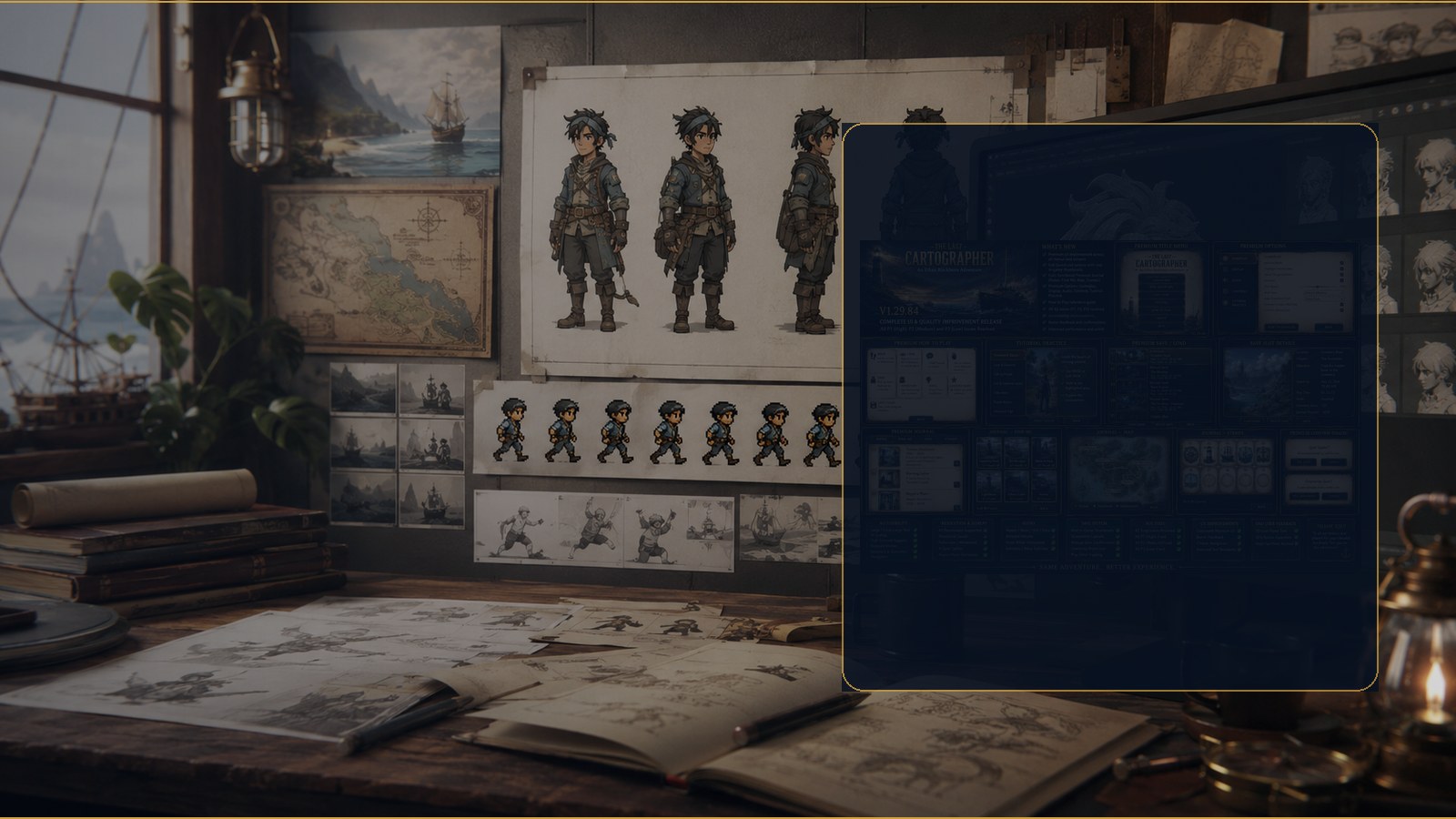
For The Last Cartographer, that means larger interaction targets, strong hover feedback, Assisted Mode, progressive hints, better save/load, accessible text scaling and clearer navigation. It does not mean replacing every puzzle with a glowing objective marker.
I also think the genre is particularly good at humor. A player can choose an unnecessary action, and the game can acknowledge it. That relationship between player curiosity and authored response is hard to reproduce in media where the audience cannot poke at the scenery.
The same is true for optional content. Hidden rooms, missable points, character-specific dialogue and ridiculous achievements give the player ownership over the version of the adventure they experienced.
Technology changes. Input devices change. Expectations around accessibility and usability absolutely should change. But the core pleasure of entering a strange place, inspecting it carefully and gradually understanding what happened there is not obsolete.
That is the experience I am building around.