The Last Cartographer started as a story, which sounds like an advantage when turning it into a game. In some ways it is. I already know the people, the larger mystery, the tone, the places that matter, and the emotional spine of Ethan Blackburn’s journey. But I learned very quickly that having a novel is not the same thing as having a game design.
A game cannot ask the player to watch Ethan solve the mystery. It has to let the player become part of solving it.
A novel controls the camera. I decide what Ethan notices, when a clue appears, and how long the reader stays in a room. A point-and-click game gives that control to the player. Someone can inspect the wrong painting five times, talk to Liam before touching the clue I expected them to see, or spend ten minutes trying to use a fountain pen on something that absolutely does not need a fountain pen.
That changed my approach. I am not trying to make a digital version of the novel scene by scene. I am building a companion experience in the same world, with puzzles, optional discoveries, conversations, humor, exploration, and moments that only make sense because the player is actively participating.
The biggest rule I keep returning to is that the player should feel curious, not railroaded. Important story beats still need structure, but the spaces around them should invite experimentation. That is why the game has Examine, Talk, Use, Take and other Sierra-style verbs, optional interactions, hidden Find Me discoveries, journal clues, and small jokes that exist simply because somebody thought to click there.
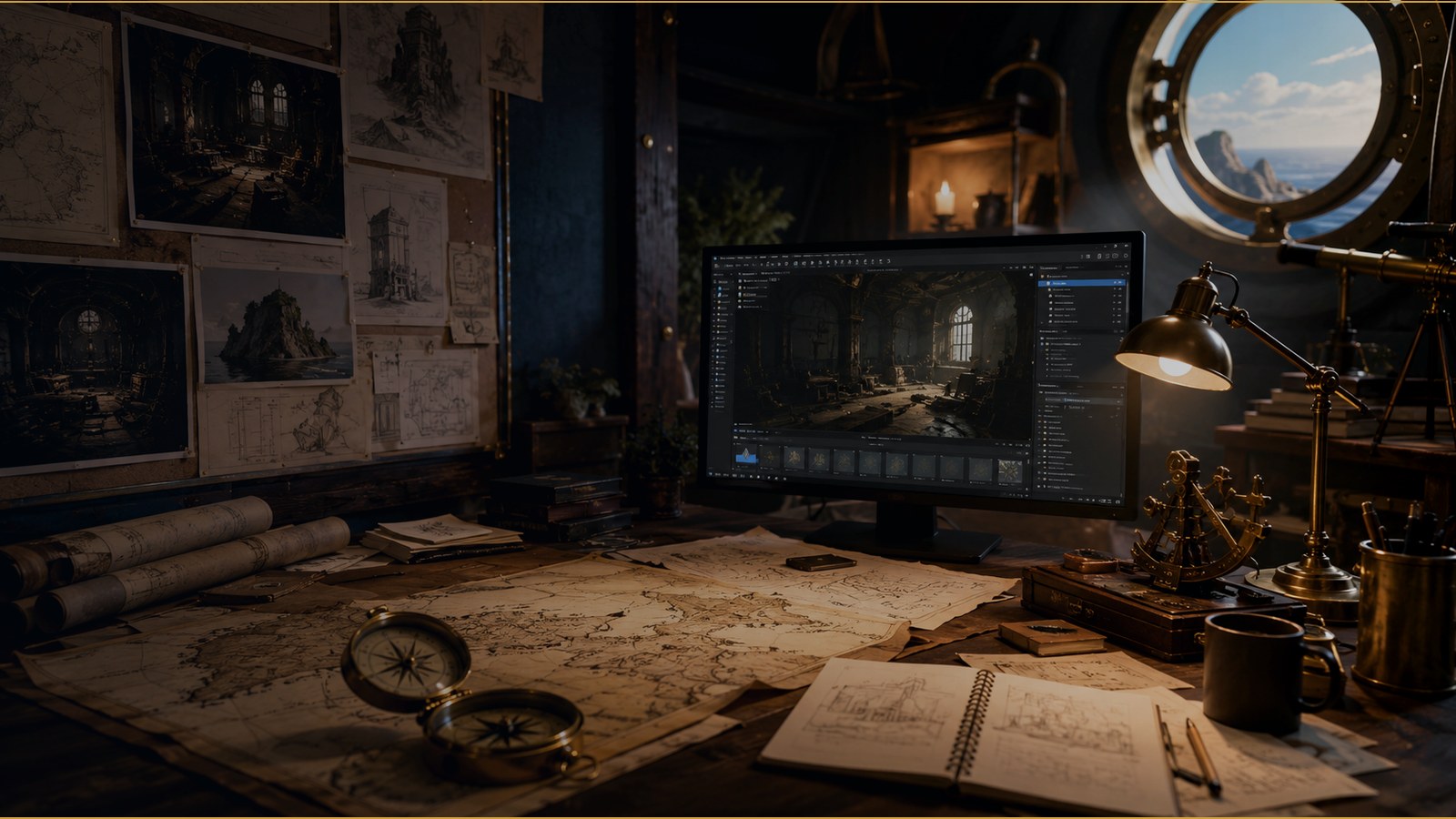
That is also why development sometimes takes longer than a straight adaptation might. Every room is not just a picture behind dialogue. It needs navigation, hotspots, blockers, character placement, possible interactions, feedback, journal connections and state changes. When those pieces work together, the world starts to feel less like a set and more like a place.
That is the version of The Last Cartographer I want to make: familiar to readers of the story, but worth exploring even if you already think you know what happens.